Flexible Order Quantities to Meet Your FFKM Seal Needs
Seven proprietary perfluoroelastomer compounds spanning −42 °C to +320 °C, moulded into O-rings, oil seals, gaskets and custom profiles. Every property quoted with its test standard and conditions.
Six properties the application actually depends on
High temperature resistance
Seven grades spanning −42 °C to +320 °C. OME7505 is rated for continuous 300–320 °C service, with every figure quoted against its ASTM method and condition.
Chemical resistance
A fully fluorinated backbone with no C–H bonds: resistance to acids, bases, ketones, esters, amines and oxidisers where FKM would swell or harden.
Plasma resistance
OMS70S is the transparent ultra-high-purity grade for O₂ and fluorine-based plasma, specified for etch, ashing and chamber sealing.
Low outgassing
High-purity grades are measured to ASTM E595 with TML ≤ 0.1 % and CVCM ≤ 0.01 % targets, and can be supplied cleanroom-packed.
High purity
Low-metal-ion OMS7102 for etch and CVD, with extractables control and grade-specific test reports available on request.
Custom sealing
Moulded to your drawing or sample — flexible order quantities, samples from one piece, and rapid tooling to shorten the design-to-sample cycle.
Products
Five product families, one material system
O-rings, oil seals, gaskets, high-purity grades and custom-moulded profiles — all produced from our own OM-series FFKM compounds.
Hardness alone will not separate these grades. Temperature, compression set at service temperature, and whether the duty is static or dynamic are what actually decide it.
Compression set is only meaningful with its test condition — every grade page states the full condition. Looking for a like-for-like replacement? See the grade cross-reference.
Industries & Applications
Where the material has to survive
Five process environments, each with a different failure mode. Pick yours to see the grades we would normally start from.
The questions that most often change which grade we propose.
What is FFKM, and how is it different from FKM?
FFKM (also written FFPM) is a perfluoroelastomer: a rubber whose polymer backbone is entirely fluorinated, with no C–H bonds. That is what gives it resistance to almost all organic media and to very high temperatures. FKM contains C–H bonds and therefore has a more limited chemical and temperature range. In practice FFKM is specified where FKM would swell, harden or fail — ketones, esters, amines, strong oxidisers, or sustained service above 200 °C.
Is FFKM the same thing as PTFE?
No. FFKM is an elastomer, so it has rubber elasticity and can be used for dynamic sealing. PTFE is a semi-crystalline fluoropolymer with no meaningful elastic recovery, so a PTFE seal normally needs a spring-energised or convoluted design. Where temperature, chemical exposure and elastic recovery are all required at once, FFKM is usually the better engineering choice.
How do I choose between the seven OM-series grades?
Start from the constraint that is hardest to change: temperature. Then narrow by medium, then by motion. Above 300 °C continuous, only OME7505 qualifies. Below −20 °C, only OM7542 qualifies. For static seals in etch and CVD where metal ions matter, OMS7102. For plasma service, OMS70S. For chemical delivery and flow meters, OM7502. For high-pressure gas or extrusion-critical service, OM9090. The grade pages give the full property table for each.
What does compression set mean, and why does the test temperature matter?
Compression set is the permanent loss of shape an elastomer takes after being held at a defined deflection, temperature and duration — it is the reason a static seal stops sealing. The value is only meaningful alongside the condition it was measured under. A grade tested at 200 °C will perform worse at 300 °C than a grade whose higher reading was measured there. Every grade page on this site states the exact condition used.
How should FFKM parts be stored, and what is the shelf life?
Store below 25 °C, protected from light, moisture, heat sources and ozone-generating equipment. Under these conditions the shelf life of finished FFKM parts is typically 5–7 years. Uncured compound requires cold storage per the supplier's specification.
We use Google Tag Manager to measure how the site is used. Analytics cookies are only set if you accept. Marketing cookies are never set without consent.

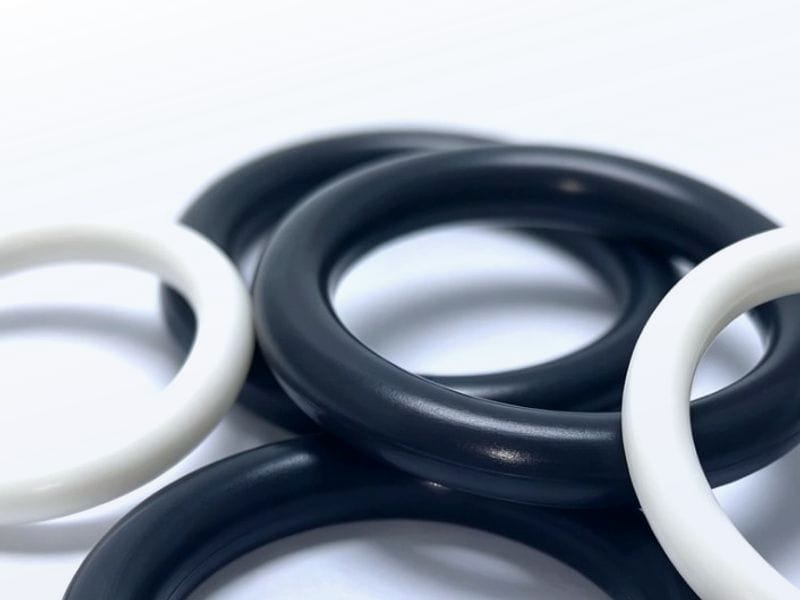


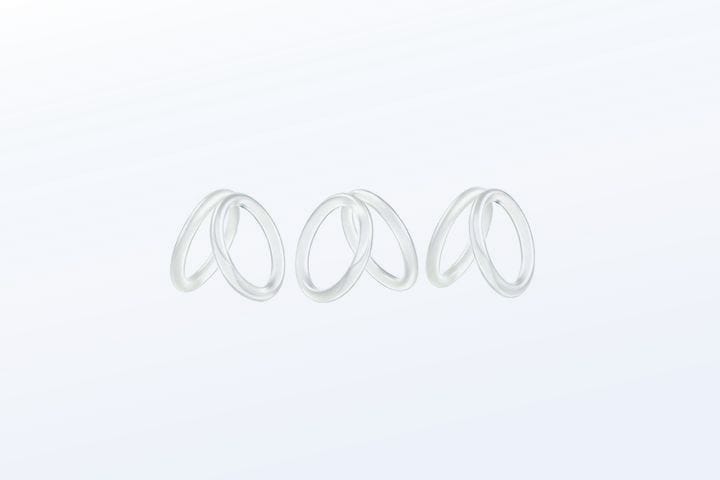 01 Semiconductor Etch / CVD / PVD / ALD · Plasma · Wet process Typical grades
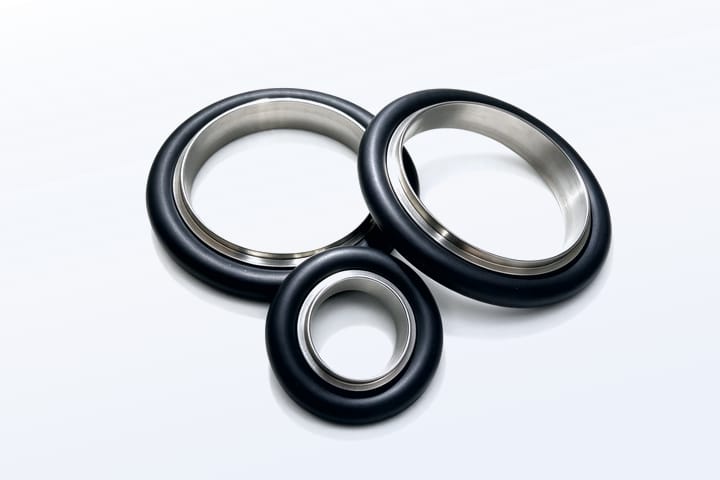 02 Vacuum Vacuum chamber · KF / ISO / CF flange Typical grades
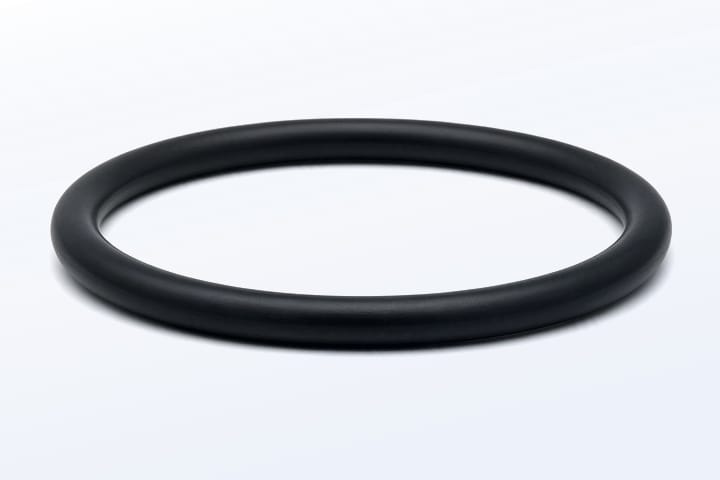 03 Chemical Processing Pumps / Valves / Reactors / Piping systems Typical grades
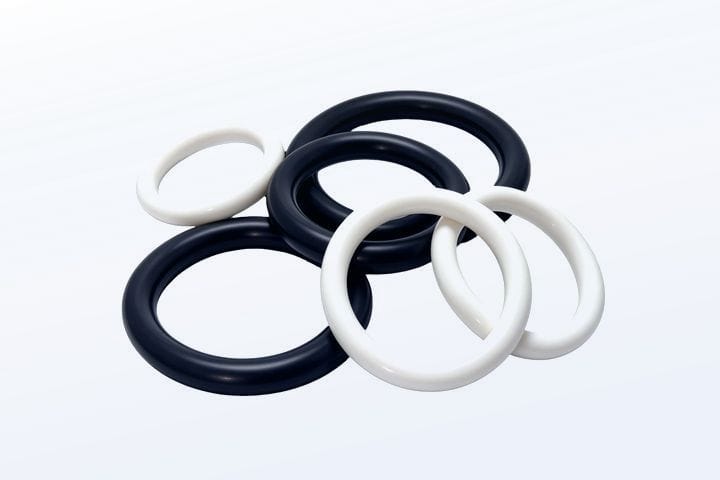 04 High Temperature Furnaces / Thermal processing Typical grades
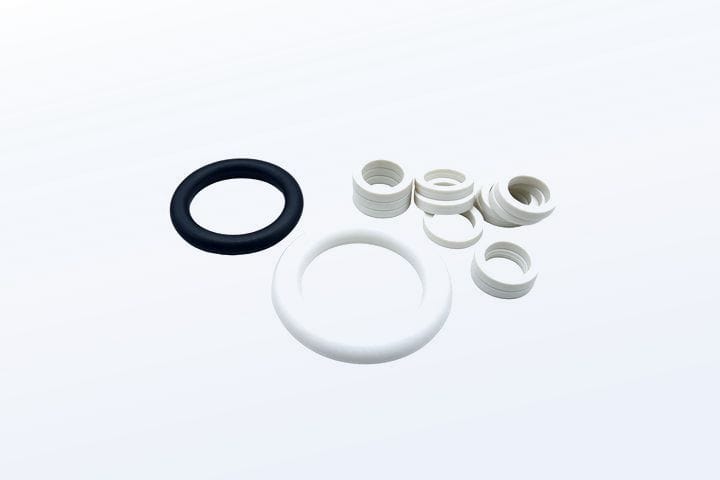 05 Industrial Equipment Pumps / Compressors / Valves / OEM Typical grades Don't see your process? Send us the media, temperature and pressure — an engineer replies within 24 hours with a grade recommendation. Ask an engineer